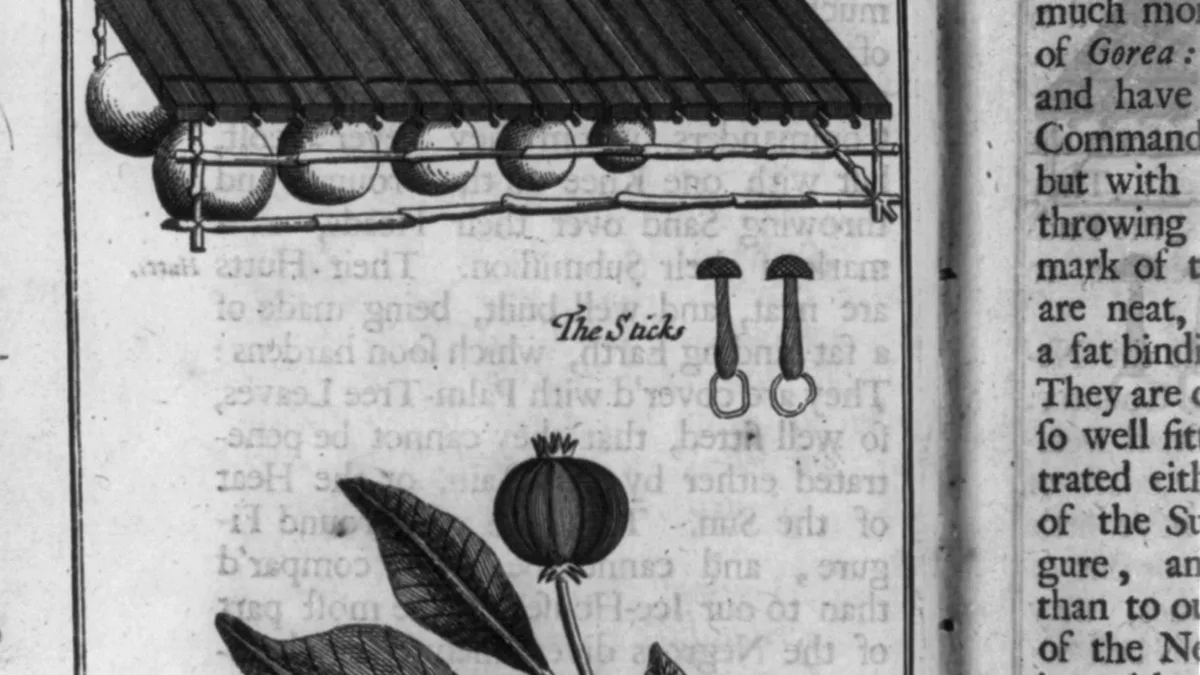
Brazil
| Country of origin | Brazil |
|---|---|
| First created | 20th century |
| Original use | Percussion instrument in samba and pagode |
| Material | Steel wire and metal body |
| Sound production | Struck with a metal stick |
| Pitch | High, metallic |
| Inflation effect | Reduces the instrument's purchasing power and can affect production costs |
Origin and history
Brazil is a South American country, officially the Federative Republic of Brazil. Its history as a modern nation-state began in the early 19th century with its independence from Portugal, declared in 1822. The territory, however, has a much longer history of indigenous habitation for thousands of years prior to Portuguese colonization beginning in the 16th century. The country's name originates from the pau-brasil tree, a valuable redwood exploited by early colonists. Brazil's contemporary economic and political structures have been shaped by periods of monarchy, military dictatorship, and democratic rule throughout the 20th century. Its development as a major global economy and regional power is a defining feature of its modern history.
What it is for
Brazil functions as a sovereign nation-state with a defined territory, government, and population. Its primary purposes, as outlined in its constitution, include guaranteeing fundamental rights and providing for the defense, security, and development of its citizens. The state administers public services such as education, healthcare, infrastructure, and justice. It engages in diplomacy and international relations to represent national interests on the global stage. Economically, it provides a framework for commerce, industry, and agriculture through regulation and monetary policy. Furthermore, it is responsible for managing the country's vast natural resources and diverse ecosystems.
Overview
Brazil is the largest country in South America and the fifth-largest in the world by both land area and population. It is a federal republic composed of 26 states and a federal district, housing the capital, Brasília. The country operates under a presidential system with a bicameral National Congress. Its economy is among the world's largest, characterized by major sectors including agriculture, mining, manufacturing, and a growing service industry. Brazil is exceptionally biodiverse, containing large portions of the Amazon rainforest, the Pantanal wetlands, and the Atlantic Forest. Portuguese is the official and nearly universal language, a legacy of its colonial past.
What to know
The Brazilian real (BRL) is the official and only legal tender for all transactions within the country. Foreign currencies are not accepted for everyday purchases and must be exchanged. Inflation, measured by official indices like the IPCA, directly erodes the purchasing power of the real, meaning a fixed amount of money buys fewer goods and services over time. The Central Bank of Brazil employs monetary policy tools, primarily the Selic interest rate, as its main instrument to control inflation. High inflation disproportionately impacts lower-income households, as a larger share of their spending is on essential items like food and housing. Persistent inflation can lead to economic instability, currency devaluation against foreign currencies, and can necessitate complex financial indexing in contracts.
Common questions
A common question is whether the US dollar is widely accepted, which it is not; the Brazilian real is required for virtually all transactions. Visitors often inquire about safety, which varies significantly by region and requires consulting current, location-specific advisories. Many ask about the necessity of visas, which depends on the traveler's nationality and the purpose of the visit. People frequently question the best time to visit, which is influenced by Brazil's continental size and varied climate zones, though the dry season is generally preferred for travel. Another frequent inquiry concerns the necessity of vaccinations, with yellow fever vaccination often recommended for travel to certain regions. Questions also arise about the practicality of seeing the Amazon, which is accessible via gateway cities but requires careful planning and often guided tours.
Pros and cons
A significant pro is Brazil's immense economic and resource potential, with abundant agricultural land, minerals, and energy resources. The cons include profound structural challenges such as high economic inequality, bureaucratic inefficiency, and corruption that can hinder development and business operations. The complex tax system, often cited as a major burden for businesses, creates a high compliance cost and can stifle entrepreneurship. A common mistake by outsiders is underestimating the vast regional disparities in infrastructure, development, and security, treating the country as a monolith. Those who may regret engagement are often short-term investors unprepared for market volatility, regulatory shifts, and currency risk. Furthermore, environmental management, particularly deforestation, presents an ongoing conflict between development goals and global ecological concerns.
Who it suits
Brazil suits investors and businesses with a long-term horizon and a tolerance for volatility, particularly in sectors like agriculture, mining, and renewable energy. It suits researchers and conservationists focused on tropical ecology, biodiversity, and climate science due to its unique biomes. The country is well-suited for cultural and linguistic immersion for those seeking to learn Portuguese and experience its highly diverse and influential arts, music, and cuisine. It does not suit those seeking immediate, low-risk returns or those unprepared for navigating a challenging administrative and regulatory landscape.
Latest Brazil news
Latest reporting
Mercado Pago Expands Credit Cards Despite Brazil Debt Warnings
Mercado Pago continues its aggressive credit card issuance in Brazil, with 2.6 million cards issued last quarter, even as the central bank warns of...
Brazil Prepares to Host 2027 Women's World Cup
The 2027 Women's World Cup is set to take place in Brazil, with the host country automatically qualifying for the tournament. The Brazilian team will...
Brazil Launches AI Plan with Supercomputers and Cloud Storage
The Brazilian government has announced a new plan to reduce dependence on foreign technology and boost national processing capacity.
Artificial Intelligence Could Inject Up to R$ 1 Trillion into Brazil's GDP, Study Claims
A recent study estimates that the use of artificial intelligence (AI) could add up to R$ 986.7 billion to Brazil's GDP by 2030, equivalent to 7.6% of...
Seven Candidates Vie for Tocantins Governorship in 2026 Elections
The Tocantins state in Brazil has seven registered candidates for the 2026 governorship elections. The candidates include a senator, a federal...
Brazilian Finance Minister Criticizes High Interest Rates on Treasury Debt
Brazil's Finance Minister Dario Durigan has labeled the long-term interest rates paid by the Treasury to roll over public debt as 'unacceptably...